



In this comprehensive guide, "How to Choose a Wine Cellar?", we review the key criteria to help you select the perfect appliance for your storage needs. Take a detailed look at aspects such as temperature regulation, humidity control, storage capacity, and design to ensure optimal preservation of your wines. This guide provides expert advice and precise comparisons, allowing you to make an informed investment in the demanding world of wine cellars.
Our wine cellars
Accessories:
How to choose your future wine cellar well ?
What is the purpose of a wine cellar?
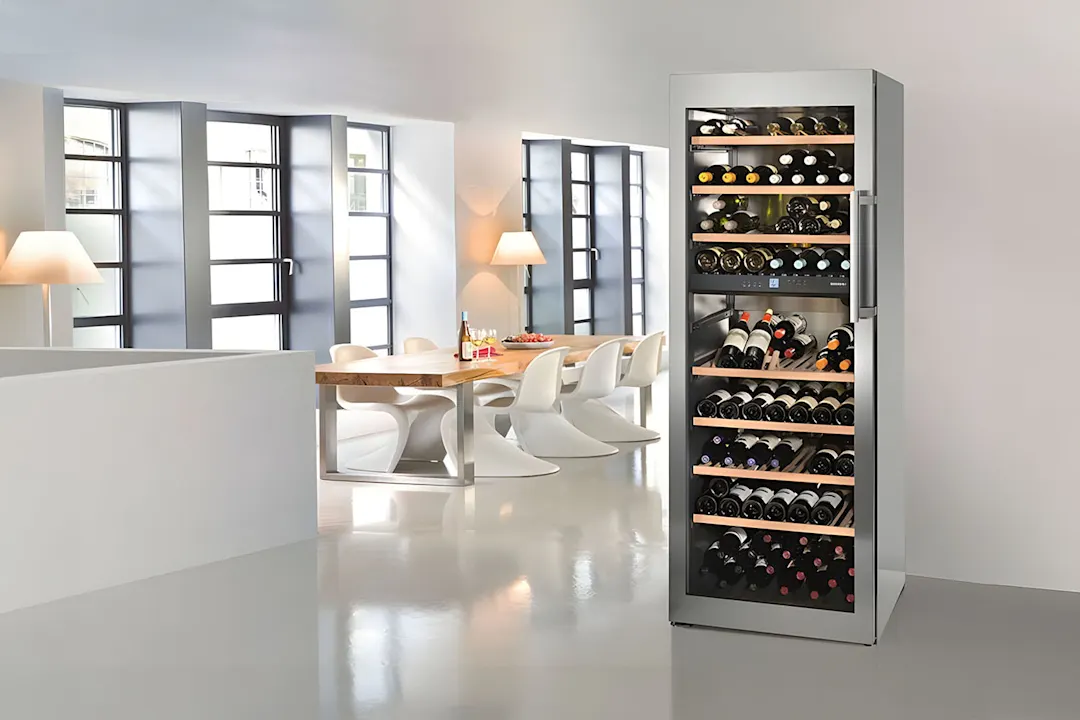
A wine cellar plays a crucial role in preserving your bottles. Whether you are a fine wine enthusiast or an occasional taster, maintaining your wines in optimal conditions is essential. A wine cellar helps regulate temperature, maintain an adequate humidity level, and protect bottles from vibrations and light. These factors are key to ensuring that your wines retain their quality over time. By providing these conditions, a wine cellar preserves the aromas and structure of your bottles, allowing them to age in the best possible way.
Example: For a high-quality red wine, a wine cellar will enhance its aromas over the years by protecting it from temperature fluctuations and excessive humidity.
What type of wine cellar should I choose?
Wine storage cabinets
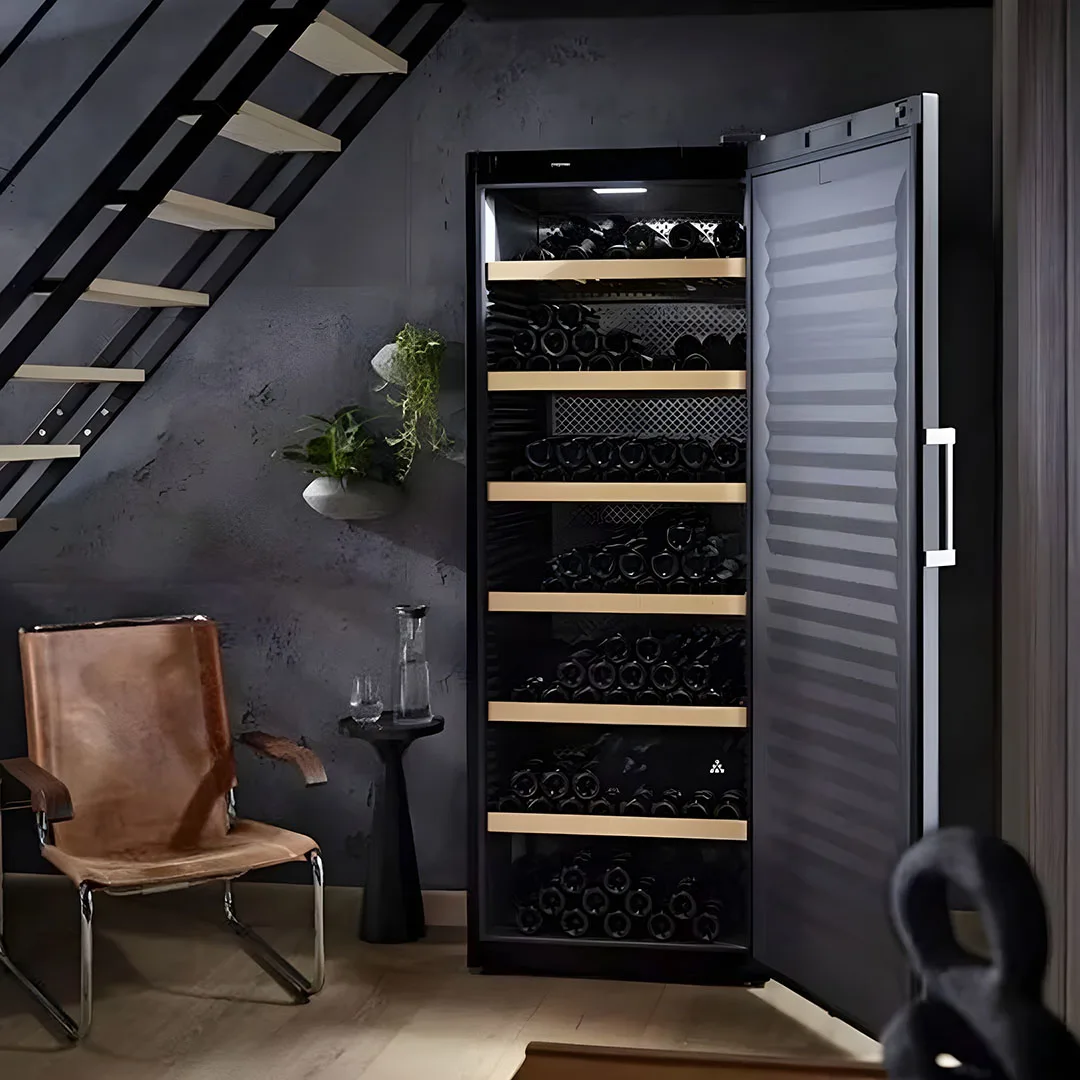
The aging cellar is specially designed to store your bottles for long periods, sometimes several decades. It recreates the ideal conditions of a natural cellar: a stable temperature, controlled humidity, absence of light and vibrations. This type of cellar is particularly suited for collectors or passionate oenophiles who own bottles that require a prolonged rest. Some wines may need years of maturation to reveal their full complexity.
Aging wine cellars are often large-capacity, holding between 100 and 300 bottles, depending on the model. They come with carbon filters to purify the air, UV-resistant doors, and sometimes anti-vibration systems to ensure the best conditions for your fine wines. These cellars let you preserve your bottles under optimal conditions for many years without worrying about external climate fluctuations.
Example: A wine cellar is ideal for storing rare wines or old vintages, which are often delicate and sensitive to variations in temperature and humidity.
Temperature control cellar
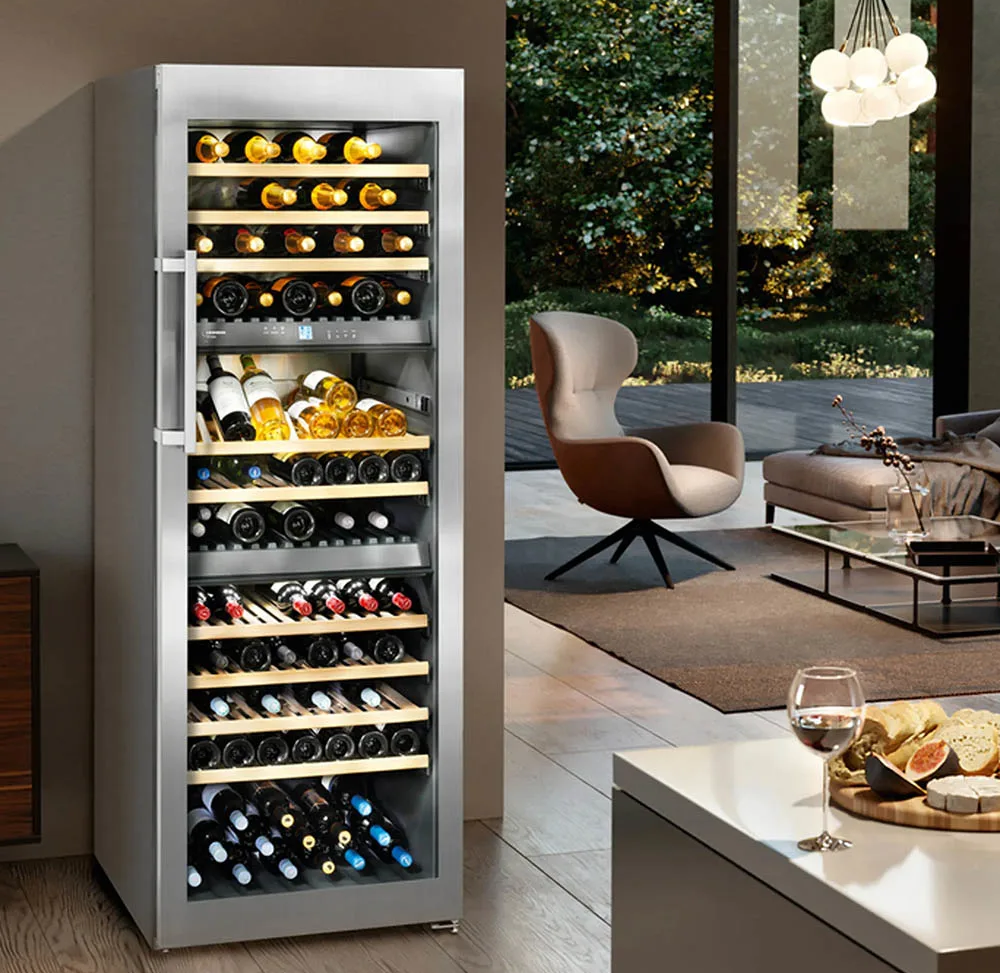
The serving wine cellar (or serving cellar) is designed to prepare your wines to be served at the ideal temperature. Unlike a wine cellar for ageing, it is not intended for long-term storage, but allows you to bring your bottles to the right temperature for immediate tasting. It is the perfect solution for enthusiasts who want their wines ready to be consumed..
These cellars are equipped with multiple temperature zones to store different types of wine, such as reds, whites, or champagnes, each needing specific temperatures to fully reveal their aromas. Additionally, they usually consume little energy and easily fit into any kitchen or dining room, thanks to their often compact design.
Example: A temperature-controlled wine cellar will allow you to serve a red wine at 16°C and a white wine at 10°C, ready to be enjoyed immediately by your guests.
Built-in wine cellar
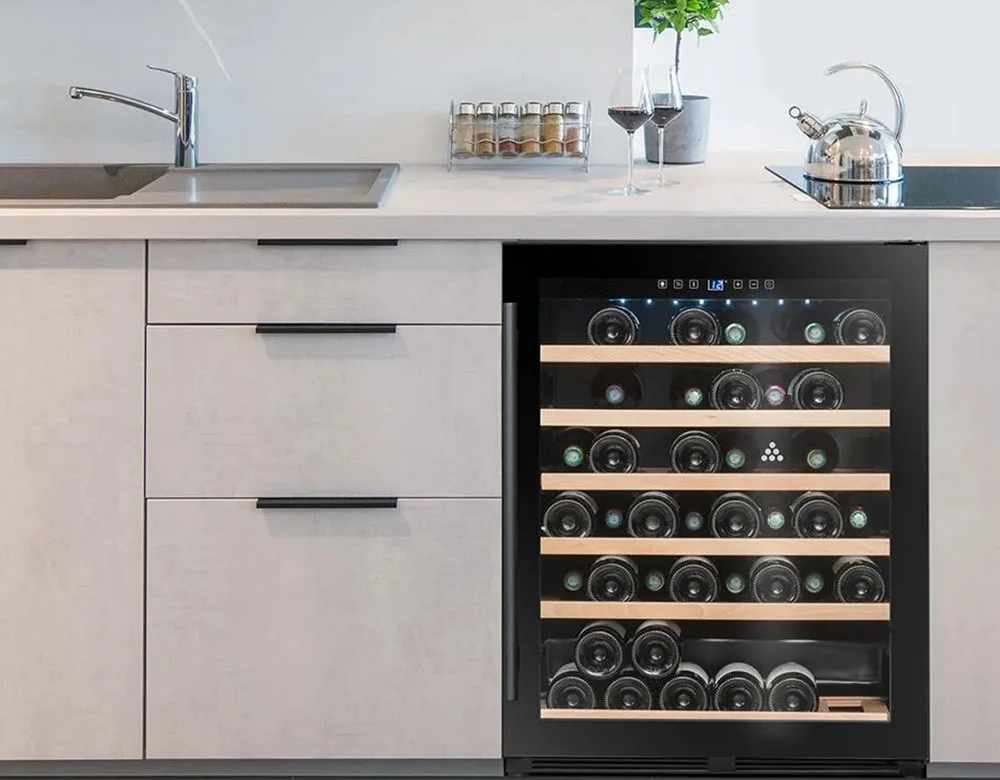
If you lack space or want to integrate your wine cellar into a stylish kitchen, the buit-in-wine cellar is the ideal solution. This type of cellar is designed to fit perfectly under a countertop or inside a kitchen cabinet. In addition to being practical, built-in cellars offer an elegant design that complements the rest of your interior.
They come in various sizes, from tall units to compact column designs, and can hold dozens of bottles while remaining discreet. Models with glass doors are particularly popular for their aesthetics, while still providing excellent protection against UV rays thanks to special glass treatments.
Example: A built-in wine cellar can store between 12 and 50 bottles, while discreetly integrating into a modern kitchen

Tips for Using Your Wine Cellar
What temperature for tasting your wines?
The tasting temperature is crucial for fully appreciating your wines. Here are the recommendations for each type:
- Bordeaux reds: 16 to 18°C
- Burgundy reds: 15 to 16°C
- Light reds: 10 to 14°C
- Champagnes and sparkling wines: 10 to 12°C
- Rosés and dry whites: 8 to 10°C
- Sweet whites: 7 to 9°C
Where to install your wine cellar?
Place your wine cellar in a cool spot, away from sunlight and vibrations. Avoid areas with extreme temperatures (below 0°C or above 38°C). A cellar with a glass door adds aesthetic value, while a solid door is ideal for long-term storage.
The importance of a wine register
For optimal management, maintain a wine register noting the entry date, vintage, ideal consumption date, and location of each bottle. This ensures precise organization and tracking of your collection.
Regular maintenance
Replace the charcoal filter every year to ensure clean air. If your cellar has a re-humidification system, remember to change it regularly, like any household appliances, to maintain an ideal humidity.